Birth: 09/10/41 — Kyoto, Japan
Death: 10/04/97 — Komatsu, Ishikawa, Japan (age 56)
Games Created or Co-Created: Game & Watch, Game Boy, Ultra Hand, Virtual Boy; produced Metroid and Kid Icarus; supervised Donkey Kong
Other Works: Nintendo (1965–1996), head of Nintendo Research & Development 1; inventor of the D-pad; Koto Laboratory (1996–1997); the Bandai WonderSwan (developed by Yokoi, released posthumously in 1999); “Lateral Thinking with Withered Technology” design philosophy; posthumous Lifetime Achievement Award, Game Developers Choice Awards (2003)
Cause of Death: Car accident — struck by a passing car on the Hokuriku Expressway after getting out to inspect damage from a rear-end collision
Gunpei Yokoi is the man who put video games in your pocket. Before him, a video game was something you played at home or in an arcade. After him, it was something you carried with you — on a train, in a car, anywhere. The Game Boy alone sold more than 118 million units, and Yokoi is the one who made handheld gaming mainstream.
He started at Nintendo in 1965, and not in a glamorous job — he was hired to maintain the machines on the assembly line that made Nintendo’s hanafuda playing cards. In his spare time he built himself a toy out of spare parts: an extending arm that grabbed things when you squeezed its handles. Nintendo president Hiroshi Yamauchi happened to see it on a factory visit, and ordered Yokoi to turn it into a real product for the Christmas rush. The Ultra Hand was a huge hit — 1.2 million sold — and just like that, Yokoi was moved out of maintenance and into making toys.
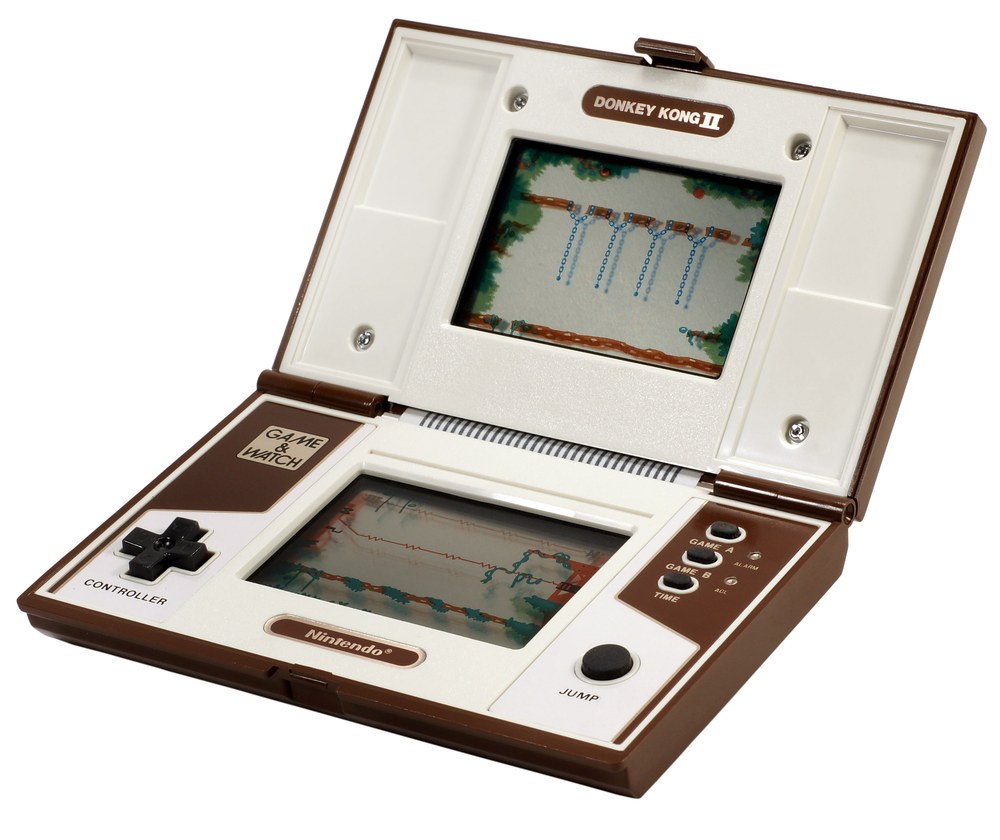
The big one came on a train. Riding the Shinkansen, Yokoi watched a bored businessman passing the time by pressing the buttons on his LCD calculator, and he had an idea: a pocket-sized handheld that was a game and a clock in one. That became the Game & Watch, launched in 1980 — a little LCD handheld, one game per device, with a clock built in. Nintendo made 60 of them over the next eleven years, and they sold more than 40 million copies.
It was also where Yokoi invented the cross-shaped D-pad, the directional button that would become standard on every game controller that followed.
He was also the man who taught Shigeru Miyamoto how to make games. When Yamauchi put the young Miyamoto in charge of Donkey Kong in 1981, it was Yokoi who supervised the project, explained the intricacies of game design to Miyamoto, and got the game approved.
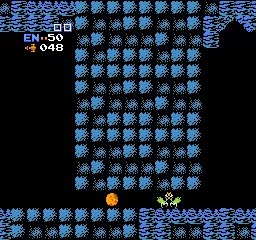
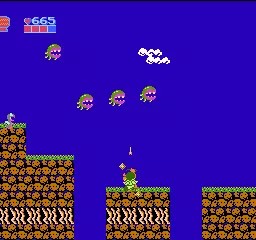
He went on to produce Mario Bros. — he was the one who suggested the multiplayer concept — and then, as head of Nintendo’s Research & Development 1 team, he produced two of the most important games of the NES era: Metroid and Kid Icarus, both in 1986.
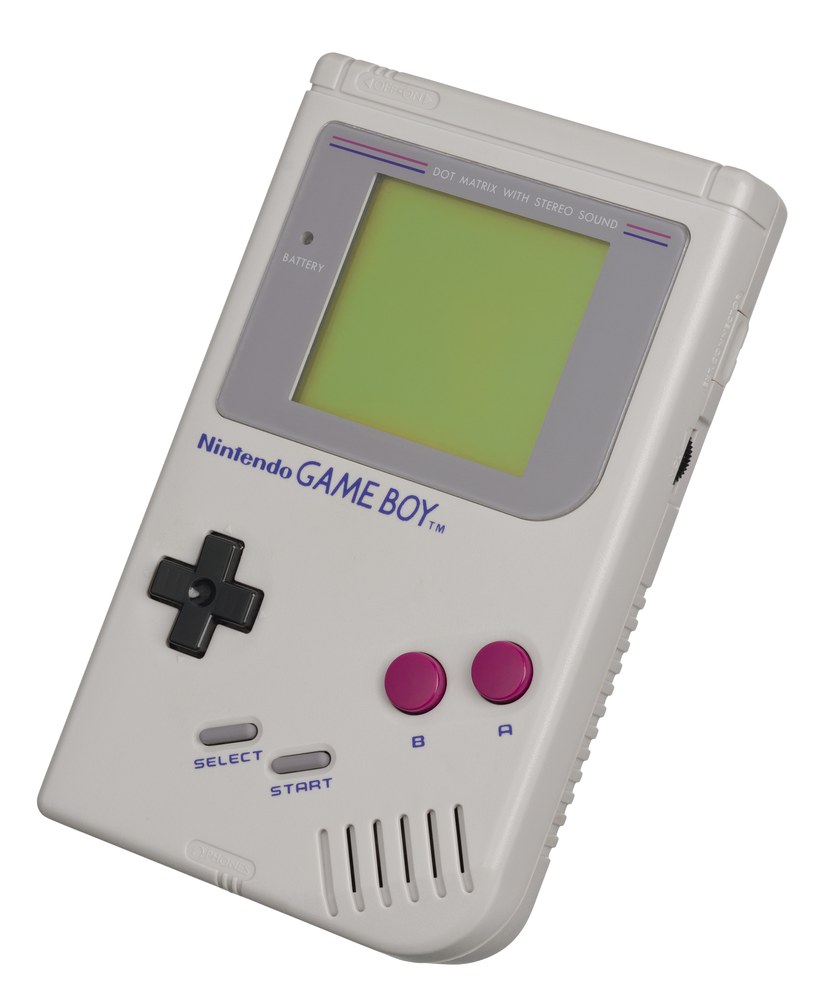
Then came the Game Boy in 1989. Here is the part I love most about Yokoi: he deliberately left the color screen OUT. At the time, a color LCD was the cutting-edge thing to do, and his competitors — Sega’s Game Gear, Atari’s Lynx — both had one. Yokoi refused, because a color screen would have eaten batteries and driven up the price. His Game Boy ran for hours on four AA batteries, and that is a big part of why it won.
He called his approach “Lateral Thinking with Withered Technology” — take mature, cheap, reliable technology and find a new way to use it, instead of chasing the newest thing. Nintendo still thinks this way today, and you can see it in the Wii.
Not everything worked. His last creation for Nintendo, the Virtual Boy in 1995 — a red 3D headset — was a commercial failure and was discontinued after a year.
Yokoi left Nintendo in August 1996, after thirty-one years, and started his own company, Koto Laboratory, where he led the development of the Bandai WonderSwan handheld. He never got to see it released — it came out in 1999, two years after his death.
He died on October 4, 1997, in a car accident on the Hokuriku Expressway. His car had rear-ended a truck, and after he got out to inspect the damage, a passing car struck him. He was 56. Shigeru Miyamoto, the man he had mentored, designed his tombstone and eulogized him at his funeral. In 2003, Yokoi posthumously received the Lifetime Achievement Award at the Game Developers Choice Awards.
Gunpei Yokoi will be remembered for giving us the handheld game — for looking at a calculator and seeing a game console, and for proving that the best technology is not always the newest. Every portable game you have ever played traces back to a bored businessman on a train and a man who knew how to think sideways. He left behind a legacy of creativity and restraint that can never be replaced.
What you may not know
- Yokoi’s toy inventions were gloriously oddball — the Ultra Machine, a baseball-pitching machine (1967); the Chiritorie, a remote-controlled vacuum cleaner (1979) that was a Roomba decades early; and the Ten Billion Barrel puzzle.
- The Love Tester (1969) was one of Nintendo’s first electronic products — a novelty that gave a couple a “love score” from 1 to 100. It didn’t measure love, just how well electricity passed between the two people holding its metal balls.
- The very first Game & Watch was Ball, released April 28, 1980. Yokoi mocked it up and showed it to his colleague by shining light through cut-out paper shapes.
- Metroid and Kid Icarus weren’t his only productions — he also produced the original Fire Emblem (1990), Dr. Mario (1990), and Super Mario Land (1989), the Game Boy’s launch title.
- He designed R.O.B., the robot accessory that came with the Nintendo Entertainment System.
- He’d originally planned to retire at 50. His colleague Yoshihiro Taki said his retirement “had simply been a bit later than planned.”
Portfolio
Company: Nintendo
Year: 1989
Platform: Handheld
|
|
Company: Nintendo
Year: 1980
Platform: Handheld (LCD)
|
|
Company: Nintendo
Year: 1986
Platform: NES
|
|
Company: Nintendo
Year: 1986
Platform: NES
|
|
Wikipedia
Super Mario Wiki
Engineering and Technology History Wiki
MobyGames (Metroid screenshots)
MobyGames (Kid Icarus screenshots)
Portrait: Gunpei Yokoi, 1994 — Wikipedia (fair use; no freely licensed portrait exists).
Game Boy — Wikimedia Commons (Evan Amos, public domain).
Game & Watch — Wikimedia Commons (Evan Amos, public domain).
Metroid, Kid Icarus screenshots — MobyGames.