Made The Game

The Memorial Site for Deceased Game Designers

Author: admin

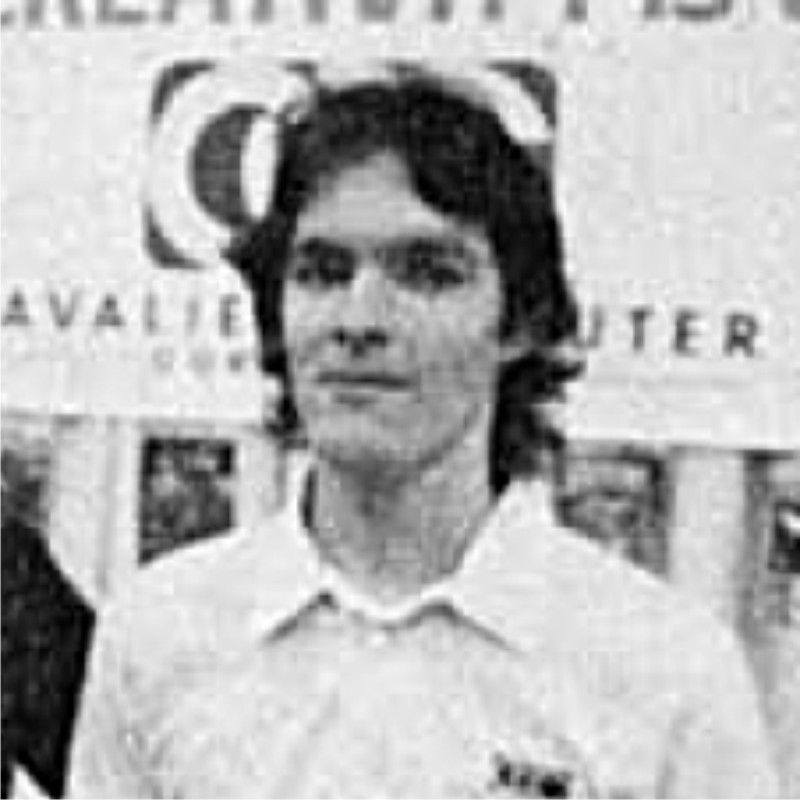
  • Jim Nitchals would have been 50 today

    Picture

    He’s the guy who gave Apple II owners a taste of arcade games with clones such as Bug Attack and Star Thief. He’s also the guy who figured out how to reverse engineer the Sega Genesis when Electronic Arts wanted to make cartridges for the system (Steve Hayes was the other guy). Sega wouldn’t budge on a more accommodating licensing deal, so Trip Hawkins of EA decided to have two of his top engineers take a “crack” at reverse engineering the system. 

    Once the Genesis was figured out, EA took action and made a bunch of games. In fact, if it wasn’t for Jim, EA may not have entered the cartridge market at all! Nintendo’s licensing deals were extremely one-sided, and Sega wanted to follow suit by offering EA a highly unfavorable deal.

    It wasn’t until the Consumer Electronics Show in 1990 that changed Sega’s mind about allowing EA to create games for the system under a much more desirable agreement. Trip told Sega execs that EA had reverse engineered the Genesis, and were ready to come out with cartridges without Sega’s blessing. After an all night meeting, Sega backed down on their original licensing demands and agreed to terms that would keep Sega in the loop of all new EA games for the Genesis. The deal allowed for EA to license as many games as they wanted for the system, yet still allow both companies to profit. 

    What both companies didn’t realize however is that EA really wasn’t holding all the cards. It turned out that Sega still could have locked out unlicensed EA cartridges, due to an oversight during the reverse engineering phase. It’s true that Jim and Steve figured out how to run games on the Genesis, but there were still security measures Sega put in place that weren’t found at the time. EA figured this out late in the game, after their CES meeting with Sega. And by then, if Sega didn’t agree, EA would have been back-pedaling to get out of the muck and empty promises they made. 

    Fortunately, when Sega and EA came to an agreement, EA didn’t have to worry about using a not-fully-reverse engineered system, and Sega provided them with all they needed to make games for their system. It worked out quite profitably for both companies in the end, but funny how what turned out to be a bluff by EA (in hindsight), helped both companies succeed.

    Jim played a pivotal role at EA, helping them gain ground in the cartridge market (something EA initially thought would be a step backwards in video gaming). This was just a small chapter in his life, but one that shifted an entire segment of the gaming public. After all, ever heard of the John Madden football series of video games? It all started as an EA cartridge on the Sega Genesis. 

    See Jim Nitchal’s bio and gameography here


  • Just added Brian Wood of Relic Entertainment

    Picture

    Brian and his wife, Erin

    Best known for his contributions in the Company of Heroes franchise, Brian R. Wood died on September 3rd, 2010 when a car hit him and his wife on Whidbey Island in Washington state. Relic and the gaming public lost a great designer that day. 

    My heart goes out to his wife and child, who I’m sure are still working through the loss. His Bio and Gameography can be found here.


  • Welcome to Made The Game

    Remembering Game Designers

    Every time we read about the death of a game author, or someone else in the interactive entertainment industry, all of us are effected. Video games are part of our history and culture. Game designers have contributed to our personal histories as well. Almost everyone has picked up a controller at one point. And, even if they haven’t, they’ve used a device that was likely inspired by an innovator in the video game industry . 

    We’ve played their games, or at least, played a game that was influenced by one of their games. These designers created products that engaged our minds sometimes for days, weeks, months, and nowadays, years! They’ve truly impacted our lives, even if indirectly. Their contributions to video games form the very fabric in which today’s game industry is woven.

    This site is dedicated to the men and women that gave us years of entertainment, happiness, and sometimes just some good old relief from stress. They are the sometimes forgotten folk heroes of the video game world. Each of them installed their essence into their games, and hence, the gaming universe as a whole. And we all get a little dose of their magic every time we pick up a controller or keyboard.

    A long time ago, a friend of mine told me that she would sometimes walk around the cemetery just speaking the names she read on tombstones. She felt that somehow, by doing that, it was a way of saying “You are remembered.” 

    Wow. Some of those gravestones were over a hundred years old. If it wasn’t for someone here and now immortalizing them with only their words, they may have been forever lost in that stitch of time. 

    There’s just something about not being remembered that’s disheartening. Maybe it’s because we all want to mean something to someone else. I guess that’s where the inspiration for this website comes from: Our friends, relatives, and others we don’t know, can live on through our remembrance of their legacy. What they’ve left behind, we bring forward.

    “Our dead are never dead to us, until we have forgotten them” -George Eliot

    For those fallen game designers who have contributed to my life: 
    You Are Remembered. 
    And, Thank You for the choices you made in your life that brought fulfillment to mine.