Made The Game

The Memorial Site for Deceased Game Designers

Author: admin

  • Jerry Lawson, Creator of the Fairchild Channel F, Dies

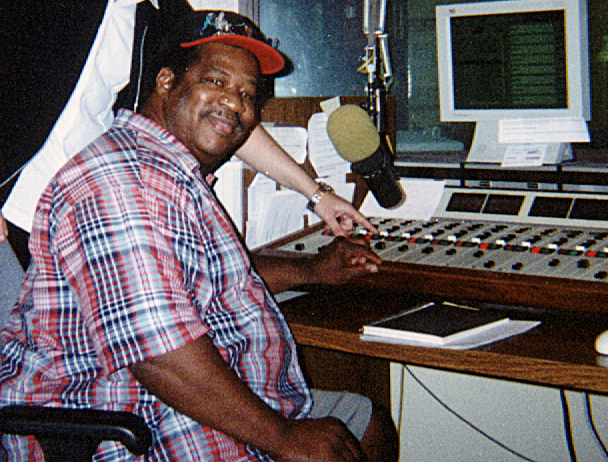
    Picture

    Jerry Lawson, the engineer who created the Fairchild Channel F, the first home video game console with interchangeable cartridges, died on April 9, 2011, at the age of 70.

    He died of complications from diabetes. About a month earlier, the International Game Developers Association had honored him as an industry pioneer for his work on the game cartridge concept. He accepted the honor from a wheelchair.

    If you have ever slid a cartridge into a console — any cartridge, on any system — you owe Jerry Lawson. The Channel F was the first commercial home console built around programmable ROM cartridges — games stored as software on a removable cartridge. Earlier consoles like the Magnavox Odyssey used removable cards, but those were circuit jumpers, not cartridges. Lawson led the Fairchild team that turned technology licensed from Alpex into a durable consumer product. Atari’s Video Computer System followed a year later with the same idea, and every cartridge console since has used it. The Channel F was also the first home console with a pause button, and its eight-way joystick was designed by Lawson himself.

    He grew up in Queens, New York, building his own ham radio station at 13 and repairing television sets for money. He joined Fairchild Semiconductor in 1970, and by the mid-1970s he was running the company’s video game division. He was one of the few Black engineers in Silicon Valley, and an active member of the Homebrew Computer Club during the 1970s — the group that included Steve Jobs and Steve Wozniak.

    He left Fairchild in 1980 and founded Videosoft. The Channel F never became a hit, but its idea changed everything. He will be missed, and he will be remembered.

    Read more about Jerry Lawson on his bio page.

    Image Credits
    Portrait: Jerry Lawson at KJZZ Radio — Wikimedia Commons (OU133, CC BY-SA 4.0).

  • Gunpei Yokoi, Creator of the Game Boy, Dies

    Picture

    Gunpei Yokoi, the Nintendo designer who created the Game Boy and the Game & Watch, died on October 4, 1997, at the age of 56.

    Yokoi was killed in a car accident on the Hokuriku Expressway in Japan. His car had rear-ended a truck, and after he got out to inspect the damage, a passing car struck him. His death was confirmed two hours later.

    If you have ever played a game in your hands — on a bus, on a plane, in a waiting room — you owe Gunpei Yokoi. He started at Nintendo in 1965, maintaining the machines that made playing cards, and built his first hit, the Ultra Hand toy, out of spare parts in his spare time. In 1980 he turned a bored businessman’s calculator into the Game & Watch, the little LCD handheld that sold more than 40 million copies and gave the world the D-pad. In 1989 he gave us the Game Boy — and, in the decision that defined him, he left the color screen out, because a color screen would have eaten batteries. The Game Boy ran for hours on four AAs, and that is a big part of why it beat every color rival and went on to sell more than 118 million units.

    He was also the man behind the games. As head of Nintendo’s Research & Development 1 team, he produced Metroid and Kid Icarus in 1986, and he supervised Donkey Kong and mentored the young Shigeru Miyamoto. His design philosophy was “Lateral Thinking with Withered Technology” — take mature, cheap, reliable technology and find a new way to use it, instead of chasing the newest thing. Nintendo still thinks this way today.

    Not everything worked. His last creation for Nintendo, the Virtual Boy in 1995, was a commercial failure. He left Nintendo in August 1996, after thirty-one years, and started his own company, Koto Laboratory, where he was developing the Bandai WonderSwan handheld. It was released in 1999, two years after his death.

    Shigeru Miyamoto, the man Yokoi mentored, designed his tombstone and eulogized him at his funeral. In 2003, Yokoi posthumously received the Lifetime Achievement Award at the Game Developers Choice Awards.

    Gunpei Yokoi looked at a calculator and saw a game console. Every handheld you have ever held traces back to him. He will be missed, and he will be remembered.

    Read more about Gunpei Yokoi on his bio page.

    Image Credits
    Portrait: Gunpei Yokoi, 1994 — Wikipedia (fair use; no freely licensed portrait exists).